

President Donald Trump is nothing if not studied at crafting elaborate alternate realities.
But for the last two and a half months or so, he conjured one that seemed primarily aimed at deceiving himself.
He painted Iran as desperate to cut a deal, which always seemed to be right around the corner. And he repeatedly gave Tehran the benefit of the doubt, relaxed his own deadlines, walked back his threats and downplayed Iran’s provocations and apparent ceasefire violations.
The pattern played out again Monday, when Trump yet again backed off on threatened attacks just hours after saying he planned to take over Kharg Island. As he has before, he cited supposed progress in negotiating an agreement.
The problem with this approach is that it has made it pretty clear that Trump lacks the will to go back to war — that he prefers to just be done with it all, even as Iran plays on his reluctance.
And it increasingly appears as though Trump hoping against hope just delayed an inevitable return to the kind of hostilities that resumed this week before Trump’s latest claim of an imminent bargain.
Trump’s fanciful treatment of a potential deal with Iran appears to have mostly prolonged the war and its economic pain — and brought the situation closer to the 2026 midterm elections, which increasingly loom as a major leverage point for Iran.
Even as hostilities intensified over the last 24 hours — largely in the wake of Iran downing a US Army Apache helicopter whose pilots had to be saved — Trump was almost begrudging about being dragged back in.
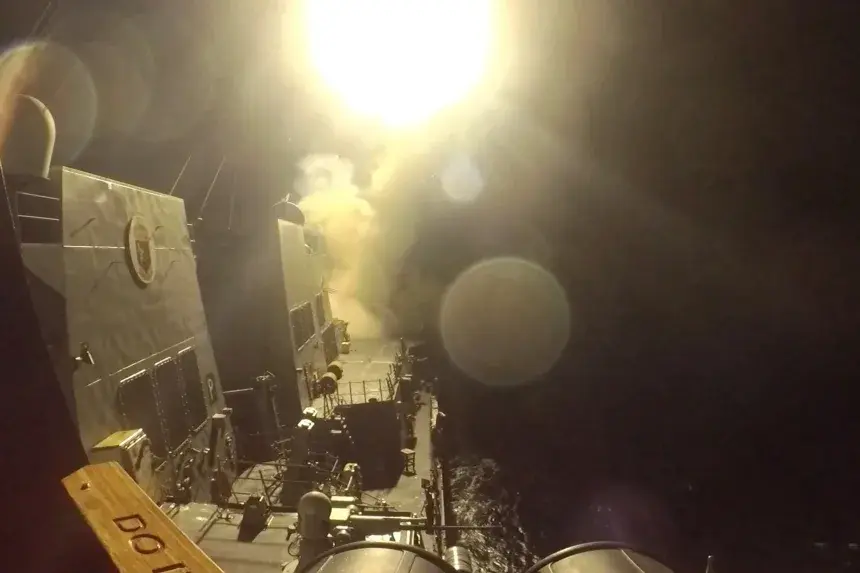
In a Tuesday social media post, he downplayed the severity of Iran downing the helicopter while saying, “Nevertheless, the United States must, of necessity, respond to this attack.” He told the Wall Street Journal the same day that Iran’s attack “wasn’t a big deal.” While talking about retaliation, he said Wednesday, “I guess we have the right to do that.”
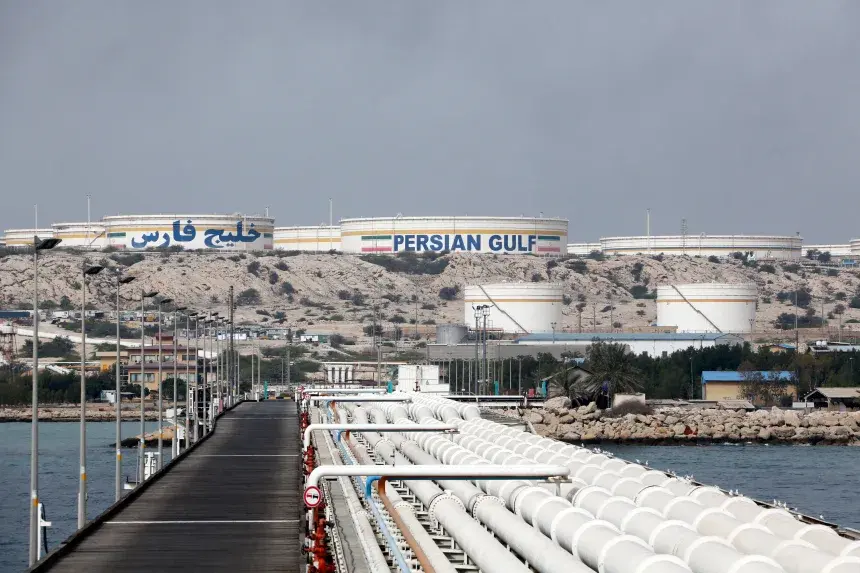
Trump has also mixed in some very tough talk about how hard he would hit Iran — even saying on social media on Thursday that the US military would soon “be taking Kharg Island,” an operation that would likely require ground troops and could risk significant casualties.
But just minutes later, there he was on Fox News downplaying that possibility by repeatedly citing Americans’ lack of “appetite” for such military action.
“I’m not sure the country has the appetite for it,” Trump said.
“I’m not sure the country has the appetite for it,” he soon repeated. “And that’s okay, I understand that.”
“I don’t want to have boots on the ground, but if I wanted to, we could put a small group of soldiers and take over the whole place,” he said.
The president later added: “I don’t know that America has the appetite to do what I would really much prefer doing.”
But it often looks like it’s Trump who lacks the stomach.
Early in the war, he repeatedly set deadlines for Iran to capitulate or else, only to relax them despite Tehran not meeting his demands. (This is also known as bluffing.)
Trump on April 7 announced a hastily assembled ceasefire whose terms nobody seemed to agree on. Then the administration tried to keep the appearance of the truce going even though Iran didn’t do the one major thing Trump insisted it had to. He initially said the ceasefire was “subject to … the COMPLETE, IMMEDIATE, and SAFE OPENING of the Strait of Hormuz” — which never happened.
And when Iran seemed to violate the ceasefire in other ways, Trump and his administration repeatedly strained to downplay it.
Trump has also sent signals that he’d very much like to avoid going back to war. Last week, for example, he twice cited the cautionary tale that was Jimmy Carter and the Iran hostage crisis.
“I don’t want to put men in that kind of danger,” Trump said on June 3. “I remember Jimmy Carter had some bad problems in Iran with the hostages. I don’t want to ever put our people in that kind of danger.”
He added the next day, while downplaying the possibility of sending in troops to recover highly enriched uranium: “I didn’t want to be Jimmy Carter, you know — I didn’t feel like being Jimmy Carter.”
In other words, Trump’s reluctance to go back to war hasn’t been subtle.
Allies might fancifully view Trump’s position as posturing or some strategic play. But it seems to have only encouraged Iran to hold out for more favorable terms from a peace deal.
Indeed, that’s the problem with Trump telegraphing what he wants to do and repeatedly giving the other side a pass: It gives Iran leverage.
That doesn’t mean Trump won’t ultimately go big in restarting the war.
But it begs the question why the administration didn’t respond more strongly, for instance, when it became clear Iran wasn’t satisfying Trump’s demand that the ceasefire include reopening the strait.
That seemed a pretty big violation, but the administration basically ignored it.
And the US trying to accommodate Iran for two months has not been without a cost. One of Iran’s biggest assets is the passage of time. While Trump might view the US blockade of the strait as bleeding the Iranian economy, he’s on the clock too.
As the midterm elections approach, Republicans will likely be putting more pressure on Trump to wrap up what looks like a potential political albatross for them thanks to still-spiking inflation. That could force some very difficult decisions — i.e. whether to go back to war or to cut a suboptimal deal in the name of bringing this ugly chapter to a close.
And that’s a real potential choice Trump increasingly can’t ignore.